
The discovery of the new deposits “could potentially rewrite the ‘heavy in the south, light in the north’ pattern of rare earth resources in China”, a team from the Chinese Academy of Sciences’ (CAS) Institute of Geology and Geophysics and the Heilongjiang Bureau of Geology and Mineral Resources said in a paper published in the Chinese journal Acta Petrologica Sinica last month.
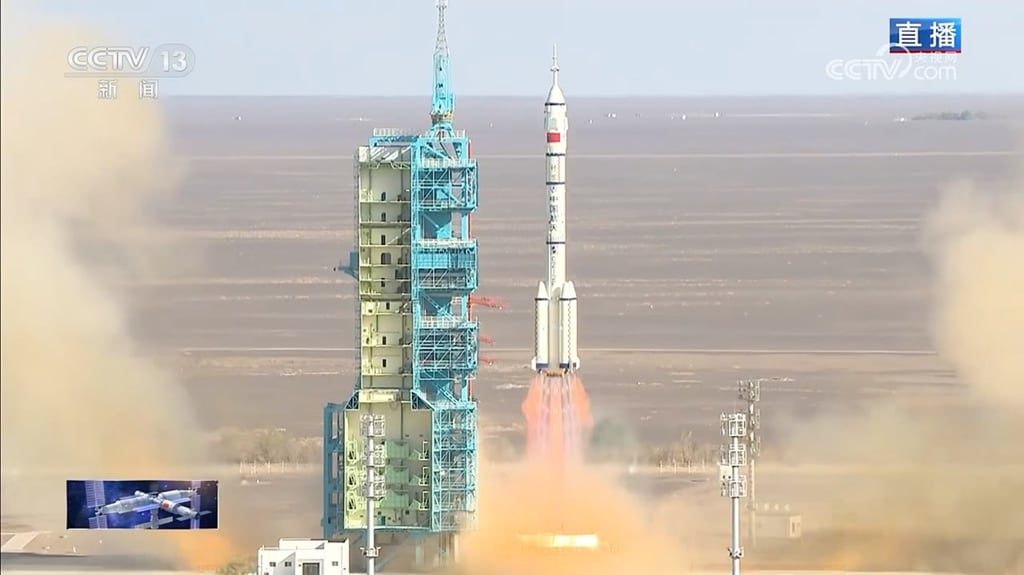
China’s Shenzhou-20 spacecraft blasts off from Jiuquan in April 2025. Among the mission’s experiments aboard the Tiangong space station was the in-orbit preparation of high-temperature superconductors, a class of materials heavily dependent on rare earth elements. Photo: Handout
Rare earth elements are a group of 17 critical minerals – including cerium, neodymium and dysprosium – that are used to produce electronics, large magnets, superconductors, and green and defence technologies.
The post China rare earth breakthrough in icy northeast could cement country’s dominance appeared first on World Online.
