
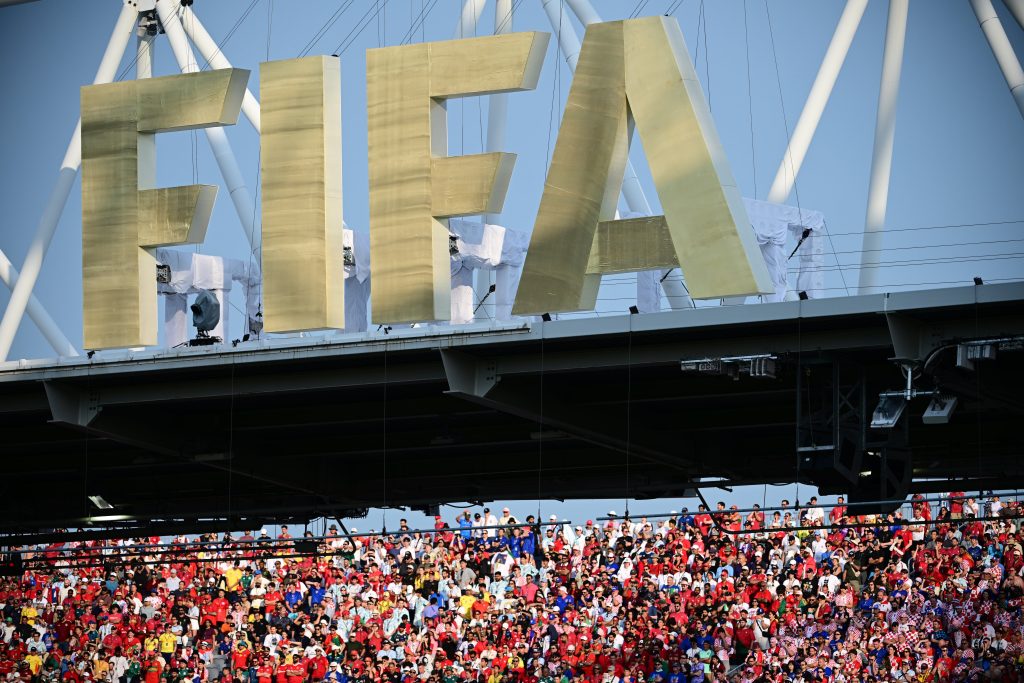
Fans watch as Portugal takes on Croatia during the first half of a World Cup round of 32 soccer match, in Toronto on Thursday.Sammy Kogan/The Canadian Press
For soccer fans in Toronto, it was the hottest ticket in town – if you were willing to spend the equivalent of a few months of mortgage payments.
World Cup tickets to the Portugal-Croatia playoff game in Toronto on July 2 were selling for up to $5,900 each on resale websites such as StubHub hours before kickoff – far more than fans paid to attend Team Canada’s opening game against Bosnia-Herzegovina a few weeks earlier.
“I know it seems like a crazy amount of money, and it is,” acknowledged Max Antunes, a Portuguese Torontonian, who said before the game that he was struggling to find tickets for his budget of $1,800 apiece.
World Cup ticket buyers left in the lurch as resale purchases fall through
The soaring World Cup prices show how difficult it can be for authorities to clamp down on runaway ticket costs, just months after Ontario introduced new rules and fines of up to $250,000 aimed at limiting ticket resales above face value.
Despite the new law, enforcement remains a challenge, since tickets can be sold across multiple global platforms and private sellers are based across different jurisdictions. FIFA has already been warned by the province about reselling tickets at prices that are outside of the new rules.
“All ticket sellers in Ontario must comply with our legislation that prohibits the resale of tickets above face value,” Jeffrey Stinson, spokesperson for the Ministry of Public and Business Service Delivery and Procurement, said in a statement.
“We will not hesitate to hold bad actors who break the rules accountable.”
The province declined to say whether it was investigating any complaints against resellers based on the new rules. But an online provincial registry indicated both SeatGeek and StubHub, two major ticket resellers, had been given compliance orders by the ministry in late May.
A Croatia fan with a sign asking for tickets during the march to Toronto Stadium ahead of the match.Carlos Osorio/Reuters
Compared to the Portugal-Croatia game, tickets for Canada’s Saturday match against Morocco in Houston were a bargain, with prices ranging from $861 to $1,698 on resale platforms. That was cheaper than resale tickets for the last World Cup game in Vancouver on July 7, which ranged from $1,205 to $9,316 on Friday.
Some economists say skyrocketing prices aren’t entirely market-driven, and can’t simply be blamed on ticket resellers. That’s because FIFA, for the first time, inflated the base price of World Cup tickets by using dynamic and variable ticket pricing schemes that adjust costs based on real-time demand.
This profit-maximizing strategy caused massive price hikes for standard seats, with average ticket costs rising 35 per cent above the initial base price for most matches.
Tickets for the tournament’s championship game on July 19 in New Jersey have soared well past US$10,000 before hitting resale sites.
“If you did this sort of thing in Spain, or Portugal or Morocco, you might have riots in the streets,” said Florian Ederer, an economist at Boston University.
“In North America, you’ve got a soccer fan base that is used to this type of exploitation already.”
Changing the way it sells tickets has helped FIFA squeeze more than twice as much revenue per game than it did four years ago at the Qatar 2022 World Cup, according to its own financial projections.
StubHub sued by fans over World Cup ticket cancellations
FIFA estimates ticket sales in 2026, combined with premium hospitality packages, will generate more than US$3-billion in revenue.
Technology has allowed FIFA to extract even more money from consumers, explained Pnina Feldman of the University of Virginia’s Darden School of Business.
With its proprietary electronic tickets, FIFA can also control the resale process by routing all resales through its official resale marketplace, including those initiated on third-party websites such as StubHub. FIFA charges fees and earns commissions on these transactions.
Prof. Feldman said this has made the ticket resale marketplace an opportunity for FIFA, rather than competition.
Combine this with a strategy of selectively releasing tickets in batches, rather than all at once, and you’ve got a recipe for price manipulation, Prof. Ederer said.
“They basically want to keep consumers in the dark, and try to get them to believe in this artificial scarcity, and get them to buy at much higher prices than perhaps these tickets are actually worth,” he said.
It’s a notable change in strategy from recent World Cups. FIFA set aside hundreds of thousands of US$90 tickets for Brazilians when that country hosted in 2014, and students and seniors could get in for US$15. In 2010, when South Africa played host, residents paid just US$20. In Qatar in 2022, FIFA capped ticket prices for early-stage matches, ranging from roughly US$70 to US$220.
FIFA’s pricing experiment in 2026 has already triggered a formal complaint to the European Commission from Football Supporters Europe, a soccer fan network, and consumer rights groups.
Members of the European Parliament have called for a formal review, and the attorneys-general of New York and New Jersey have launched an official investigation into what they call artificial price inflation.
FIFA President Gianni Infantino, Canadian Soccer Association President Peter Augruso and Moroccan Football Federation President Fouzi Lekjaa inside the Houston Stadium before the Canada-Morocco match.MARIA LYSAKER/Reuters
FIFA’s president Gianni Infantino has defended the ticket prices, saying North America is a wealthy market that can bear higher costs.
“We have to look at the market. We are in a market in which entertainment is the most developed in the world, so we have to apply market rates,” he told reporters at the Milken Institute Global Conference in Beverly Hills in May.
“And as a matter of fact, even though some people are saying that the ticket prices we have are high, they still end up on the resale market at an even higher price, more than double of our price.”
Prof. Ederer said if FIFA were a for-profit corporation, ticket pricing strategies designed to “trick” consumers into believing tickets are selling faster than they really are might draw the attention of antitrust authorities.
But he said it’s a different matter because FIFA – headquartered in Zurich, Switzerland – is a not-for-profit organization that says it directs billions of dollars in revenues into developing the game of soccer around the world.
However, given its scale, wealth and the “very lavish lifestyle of the of the various bureaucrats that run FIFA,” Prof. Ederer said it’s hard to understand how the organization retains non-profit status under Swiss law.
“And that raises an additional ethical consideration. Why should FIFA even maximize these profits? That’s an entirely different question,” he said.
With a report from Canadian Press


