
SINGAPORE – A career guidance officer in secondary school once asked Cindy Soh what her dream was. She struggled to answer, thinking that it was an unrealistic question.
With her disability, some jobs just felt out of reach.
Diagnosed with Morquio syndrome, a genetic disorder which affects bone development, Soh has used a motorised wheelchair since she was 13. Although the rare condition weakens her spine and limbs, it does not affect her intellect.
Yet when looking for work, she could not convince herself she was worth hiring. She backed out of interviews as she was afraid to ask for accommodations, such as extra time for evaluation tests.
“Maybe I’m not worth their time,” said the 24-year-old with an advanced polytechnic diploma in digital business, who now works as an administrative assistant at a media start-up.
She was among those who joined an engagement session with the Taskforce on Assurance for Families with Persons with Disabilities (PWD) in June.
Formed in December 2025, the task force is reviewing how support for the PWD community can be strengthened across life stages.
So far, it has completed 31 engagement visits with PWDs, their families, disability service providers, special education schools, employers and healthcare providers to understand their perspectives.
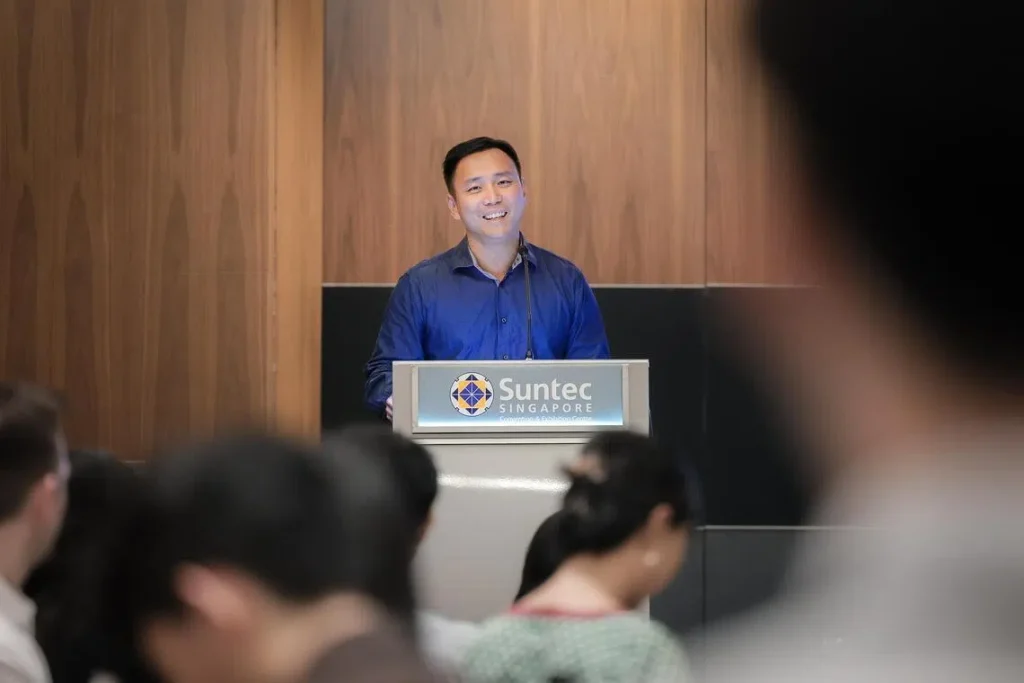
Minister of State for Social and Family Development Goh Pei Ming, who leads the five-member task force, said on July 10 at the sidelines of one such session that it will release a report with recommendations in the next few months.
Goh Pei Ming, Minister of State for Social and Family Development, speaks at an engagement session on “Supporting Persons with Disabilities in Employment”, on July 10.
ST PHOTO: GAVIN FOO
One issue that has surfaced repeatedly is the transition from school to work. Goh said PWDs face uncertainty in employment opportunities and many families hope for more support for inclusive hiring. Singapore’s current average employment rate for PWDs is 34.7 per cent. The goal is to hit 40 per cent by 2030.
Better coordination of support needed
The media observed two engagement sessions – one in June with PWDs and their caregivers, and another in July with employers and educators. Both were held at Suntec City Convention Centre.
A recurring theme was the need for better coordination of support for PWDs.
Soh felt staff at her mainstream secondary school did not know enough about guiding PWDs like her realistically about future employment. She learnt about SG Enable only in her last year at Republic Polytechnic. She found her first job as a media intern through the national agency.
For many PWDs, securing employment is a major challenge, said Edward Chan, who heads programmes and services at CaringSG, a charity supporting caregivers of special needs children.
He said some parents tirelessly approach companies to find jobs, asking: “Can you let my children try? You don’t need to pay. Just see whether they are suitable.”
Even when they find work, retention rates among PWDs remain poor.
Caregivers pointed to the lack of a standard procedure across workplaces on hiring and training PWDs, noting that their loved ones’ experiences depend on individual work environments.
Parents often worry about how their child will integrate into the workplace, said Chan, who has two teenage daughters with autism, Yan Yun, 15, and Yan Ling, 17.
Yan Ling wants to join the culinary industry, but Chan said she may struggle to handle varying instructions at work and fears that her colleagues and supervisors would hence view her negatively.
Some workplaces exclude PWDs who do not adapt well, Chan said. “At the top (in government), they have the heart to want to help, but the ground is not ready.”
Changing work culture
Chan’s fears are not unfounded, as employers acknowledged the bumpy realities of integration.
Home-grown business Kim Choo Kueh Chang, known for its Nonya dumplings, currently hires 18 PWDs in part-time roles at its factory and outlets. Most have autism or intellectual disability,
Homegrown business Kim Choo Kueh Chang’s third-generation owner Edmond Wong (right) has hired about 18 people with disabilities in part-time roles.
PHOTO: KIM CHOO KUEH CHANG
Third-generation owner of the family business, Edmond Wong, said some staff members initially complained about having to guide PWDs and rectify their mistakes, grumbling that they were “doing more work”.
What changed company culture over time, said Wong, was support from job coaches from SG Enable and Trampolene, a non-profit organisation helping people with special needs with employment.
The job coaches guided PWD staff in the initial stages, and trained existing staff on how to interact with them. Gradually, the staff warmed up to the new hires.
Ren Ci Hospital will have 17 PWD employees by August, mostly youth with autism in roles like cleaning and laundry staff, and administrative and gardening assistants. It has put up picture cues around its nursing home to guide them on work tasks, and set up quiet corners they can retreat to if they feel overwhelmed.
Former APSN student Chang Zhi Kang now works as a gardening assistant at Ren Ci Hospital.
PHOTO: REN CI HOSPITAL
Highlighting the strengths of PWD employees, Nuryasmin Hannah Suleiman, director of human resource and manpower development at Ren Ci Hospital, said: “They’re very dedicated, very steadfast, always eager to show up at work.”
Wong hopes the Government can provide more support for small and medium-sized enterprises to hire PWDs.
“If we could keep them at the workplace, I think it would help a lot of families,” said Wong. “They can live a dignified life, and their parents are well aware that they are in a safe environment.”
On employment, the task force intends to build PWDs’ work skills in school, improve reskilling services, and expand the range of jobs.
Other broad directions include improving families’ access to planning support across life transitions, helping PWDs stay engaged in the community, and reviewing how to keep disability services affordable.
Soh is now on her third job. Her current employer allows her to work from home full-time.
She types documents on her phone, and sometimes works by lying prone on her bed because of her weakening core strength.
Doubts about her worth cross her mind from time to time. But her boss, who is visually impaired, regularly reminds her that her contributions are valuable.
“It keeps me going in very difficult periods, that there’s something worth living for,” said Soh.
