
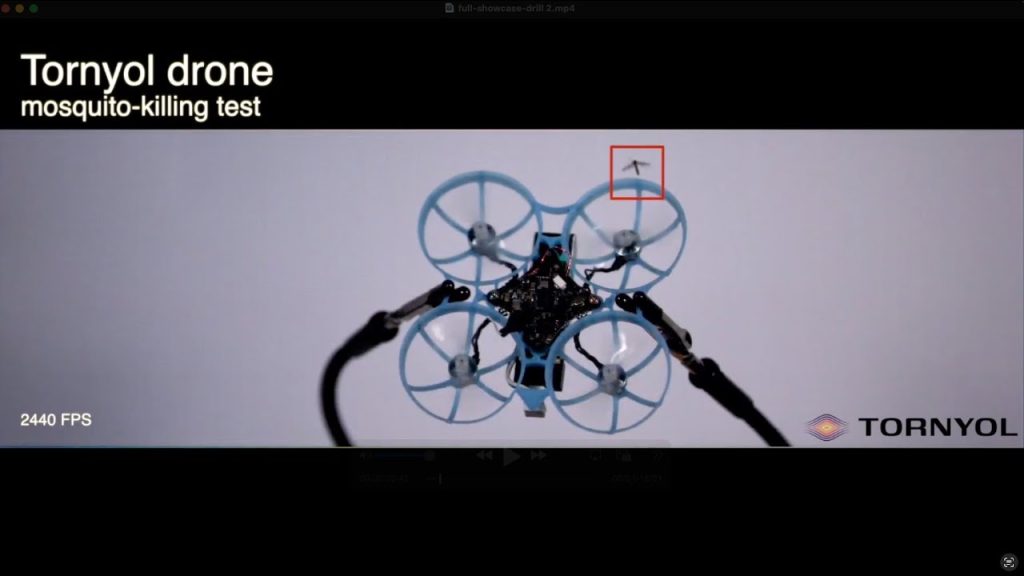
Tornyol’s drone tracks mosquitoes by their wingbeat and takes them down mid-flight
Can autonomously patrol areas of up to 5 acres
Preorders are open with a refundable $100 deposit, ahead of a targeted 2027 US launch
Tornyol, a San Francisco-based startup backed by Y Combinator, has built an autonomous micro-drone whose sole purpose is finding mosquitoes and flying straight into them. Forget spray, swatters and stinky citronella candles that go out halfway through your al fresco dinner — this propellered assassin can keep your yard bug-free all on its own.
Or at least, that’s what its makers claim. Tornyol’s drones use ultrasonic phased-array sonar — the same basic principle behind a car’s parking sensors — paired with smartphone-grade microphones and custom signal-processing software. The system listens for the specific wingbeat frequency of a mosquito, distinguishes it from harmless insects like bees, and then closes in for a mid-air kill, using its whirring propellers as the business end. In other words, the mosquito is chopped to bits.
The company says its base station carries a 380-microphone array capable of tracking targets in real time to a distance of around 8m, with future planned drone versions likely to bring that sensing ability onto the aircraft itself.
Each drone flies for around five minutes at a time before heading back to its base station to recharge, a process Tornyol says takes about 30 minutes. The idea is a relay of short, targeted flights rather than a drone loitering in the air all evening. A single unit is pitched as capable of covering up to five acres (over 20,000 square meters).
As for safety, Tornyol cites the drone’s tiny size and shrouded propellers as proof that it’s safe to have buzzing around family and pets.
You may like
You can reserve one right now for a refundable $100 deposit. Once the drone is ready to ship, you’ll be given a choice between an ongoing $50-a-month subscription or a one-off payment of $1,100 to own the hardware outright. A US launch is pegged for 2027, but availability everywhere else is TBC, pending local drone and pest-control regulatory approval — which, given what this thing actually does, may take a while.
It’s pitched as being about more than backyard convenience, too. Tornyol frames its tech as a public health boon: mosquitoes are linked to roughly 700,000 deaths a year worldwide through diseases like malaria and dengue, and the company claims its approach could eventually slash the cost of mosquito control.
Right now, though, the achievements are more modest: on July 14, Tornyol co-founder Alex Toussaint posted a video of the drone’s first confirmed “air-to-air kill”: a moth, in a curtained-off test area, rather than a mosquito in the wild.
Here’s the buzzkill
So: a small, autonomous, AI-guided drone that identifies living targets and kills them on sight, patrolling your garden 24/7. What could possibly go wrong?
I’ll admit that my sympathy for the mosquito is limited. Few people are going to find issue with a device that quietly thins out a blood-sucking insect responsible for ruining many a summer evening. If Tornyol’s drones work as advertised and stay in their lane, this is about as palatable a “killer robot” as killer robots get.
What to read next
But that’s the thing about a system built to autonomously identify a target by sound and eliminate it: the target list is a software decision rather than a hardware one. Tornyol’s own marketing boasts of distinguishing mosquitoes from “beneficial” insects like bees — which suggests the drone’s kill criteria are, by design, adjustable. Currently it’s tuned to a mosquito’s wingbeat, but what’s stopping a future firmware update — or a different customer altogether — from retuning it for something else?
And once you’re comfortable with an autonomous hunter-killer aircraft policing the back garden, the scope creep writes itself. Mosquitoes today. Flies tomorrow, probably without much complaint either. But mice? Rats? Pigeons? Those are bigger, warmer-blooded and considerably more sympathetic targets, and if we’re talking about robots that hunt and kill creatures on your property, where does the line get drawn — and by whom?
Tornyol’s engineers appear to be solving a real problem, and it’s a no-brainer to root for a tool that could put a dent in a global killer like malaria. But there’s something dystopian about killer domestic robots too, and this is a solid first step to putting them in our homes.
Follow TechRadar on Google News and add us as a preferred source to get our expert news, reviews, and opinion in your feeds.
