
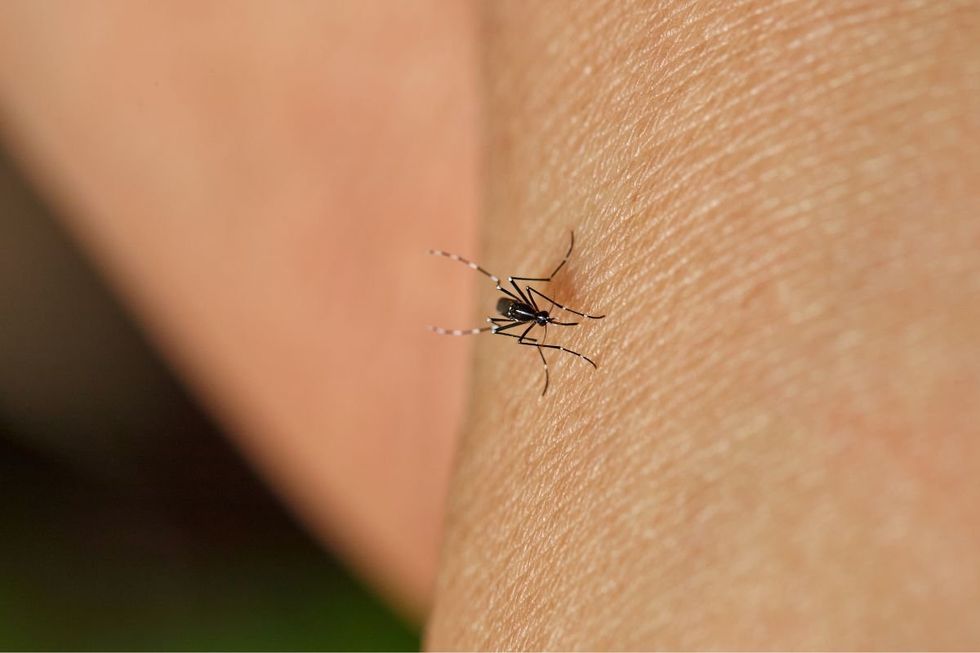
British holidaymakers heading abroad this summer have been urged by health officials to take precautions against mosquito-borne illnesses following concerning new infection data.
The UK Health Security Agency has issued guidance after figures revealed that Zika virus cases imported into the country have already surpassed last year’s annual total.
Between January and June 2026, eight Zika infections were recorded, exceeding the seven cases documented throughout the whole of 2025. Half of these originated from Indonesia.
The agency warned that mosquito-transmitted diseases including dengue fever and Zika can pose serious health risks for certain individuals.
Dengue fever is the most prevalent imported mosquito-borne illness
|
GETTY
Travellers are being advised to apply insect repellent, dress in long-sleeved clothing and trousers, and use treated bed nets where appropriate.
Dengue fever remains the most prevalent imported mosquito illness, with 137 cases recorded in England during the first half of this year.
South-East Asia and South Asia continue to be the primary regions where British travellers contract the disease. Thailand accounted for 27 infections, whilst the Maldives was linked to 19 cases.
Last year’s figures stood at 161 by the end of June, though infection rates typically climb during the latter months.
Chikungunya infections totalled 59 between January and June, with Sri Lanka proving the most common source, responsible for 18 cases. This represents a decrease from 73 during the equivalent period in 2025.
Malaria cases across England, Wales and Northern Ireland reached 557 from January to May, marginally higher than the 548 recorded at the same point last year.
Dr Hilary Kirkbride, consultant epidemiologist and head of travel health at UKHSA, emphasised the importance of preparation: “Summer is a popular time to travel; don’t let illness spoil your holidays. Good preparation and planning is important for a safe and enjoyable trip.”
She recommended consulting the TravelHealthPro website for destination-specific health guidance, including necessary vaccinations and anti-malarial medication.
“To protect against mosquito-borne infections, use insect repellent, cover exposed skin and sleep under a treated bed net where needed,” Dr Kirkbride advised.
The expert also cautioned that returning visitors should not assume immunity from previous trips.
“Even if you have visited a country before, you do not have the same level of natural protection against infections as permanent residents, so it is important to take precautions every time you travel,” she said.
Consumer group Which? has offered practical guidance on selecting repellents that actually work.
Natalie Hitchins, Which? head of home products and services, said: “If you’re travelling somewhere that has mosquitoes, it’s worth checking that your repellent will actually do the job before you go.”
Testing revealed significant variation in product effectiveness, with some providing protection for nearly ten hours whilst fashionable alternatives failed within minutes.
“Look for products containing active ingredients such as DEET, Icaridin (picaridin) or PMD, rather than relying on marketing claims alone,” Ms Hitchins advised.
Travellers are being advised to apply insect repellent
|
GETTY
She stressed that repellents should complement rather than replace recommended vaccinations or medications.
Dr Kirkbride issued particular caution for expectant mothers and women attempting to conceive, urging them to consult healthcare professionals before finalising travel arrangements.
