
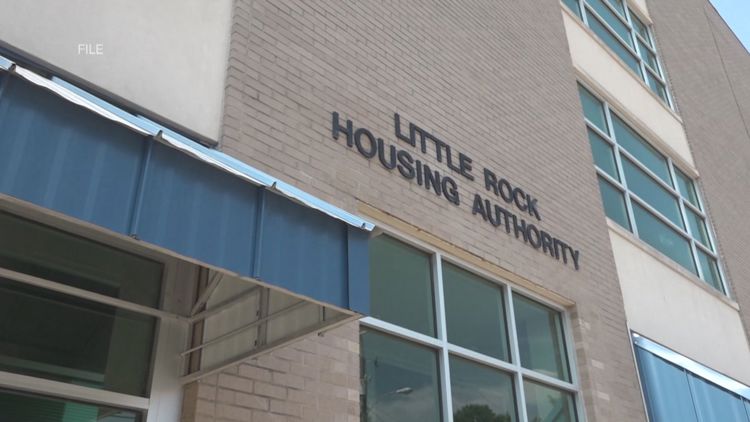
The LRHA is pushing back against a federal determination that it’s in “substantial default,” arguing the move to take control is “disproportionate”.
LITTLE ROCK, Ark. — The Little Rock Housing Authority is formally challenging a federal decision to take control of the agency, calling the move an unbalanced or disproportionate response to its recent progress.
In a response to the U.S. Department of Housing and Urban Development, housing authority leaders questioned both the factual basis and the severity of the agency’s substantial default determination. Viewers can read HUD’s original determination here and Little Rock Housing Authority’s full response here.
HUD issued the determination in April, citing the agency’s failure to meet requirements under a recovery agreement tied to years of financial struggles, low performance scores, and management concerns. The agency has been designated a troubled performer under HUD’s Public Housing Assessment System in recent years.
However, in its response, the housing authority argues that the federal government relied in part on outdated or disputed data, including a 2022 performance score that predates current leadership.
The agency also points to a 2025 interim score of 78, a standard performer rating that was later reduced by 25 points. Housing authority leaders added that the reduction lacks a clear regulatory justification and remains under appeal.
HUD has not yet issued a formal written response to that appeal, according to the housing authority.
At the center of HUD’s determination is the agency’s failure to meet a 96% occupancy requirement.
The housing authority said that the shortfall was largely limited to Madison Heights I and II properties undergoing refinancing and stabilization, and was impacted by funding constraints, units offline for repairs, and delays tied to lender requirements and limited contractor availability.
During that same period, the agency said its other public housing properties maintained occupancy rates at or above 96%.
Officials confirmed HUD was aware of those challenges through monthly recovery meetings and ongoing coordination.
“Throughout ongoing monthly recovery meetings and regular coordination with the HUD Regional Field Office, HUD was aware that achieving 96% occupancy at Madison I and II within the required timeframe was unlikely,” the agency wrote in its response.
The housing authority said it has made measurable progress since entering the recovery agreement in October 2024, including completing financial audits, improving its financial position, refinancing Madison Heights, and maintaining compliant inspection scores.
HUD regional leadership also acknowledged progress as recently as March, according to correspondence included in the agency’s response.
Executive Director Nadine Jarmon, who announced she will step down May 15 to take a position in Texas, is strongly disputing HUD’s conclusions.
“I absolutely do not agree with the issues that were raised in that letter,” she stated.
Jarmon acknowledged the agency missed some deadlines under the recovery agreement but said those delays were minimal.
“There were some deadlines inherent in the recovery agreement and there. And here’s the thing: we did miss some of the deadlines. However, at least two of them, for example, we might have missed by a month,” she said.
She pointed specifically to an audit filing and the hiring of a property manager at Madison Heights, both delayed by about a month after the agency had already worked to address years of backlog and stabilize the property.
“So with that slight slippage, now it’s the end of the world. I just don’t see the proportionate and appropriate response to what we’ve been doing,” she said.
Jarmon also questioned the timing of HUD’s action, noting the agency had been meeting monthly with federal officials and had no indication a takeover was imminent.
“No, I absolutely did not know that this letter was coming from HUD,” Jarmon said. “Why now, and why the timing, and why the course of action that they’ve taken. In my opinion, you know a little bit suspicious of the timing, that’s just me being honest.”
She said the agency had been operating under the recovery agreement for more than a year and was actively working alongside HUD throughout that process.
“We met with HUD every month and went over every aspect of this agency every month with HUD,” she added.
Jarmon also raised concerns about resources, saying the agency made progress without direct federal financial support.
“We inherited a ditch so wide and so deep that short of HUD giving us some money it’s no way we could have dug ourselves. What we did, in my opinion, was phenomenal and unprecedented without any assistance from HUD,” she said.
Despite the federal determination, Jarmon said she does not believe the agency requires a takeover to continue improving.
“I think that given time, given resources, those items could have been, in my opinion, easily addressed by the staff that’s already there, would not need necessarily a takeover, just a continuation of what we’ve been doing,” she said.
She also emphasized her decision to leave is unrelated to HUD’s action.
“No, my reason for leaving is strictly personal. It has nothing to do with the progress or lack of progress. My reason for leaving is strictly personal, has nothing to do with any of this.”
Deputy Director Dexter Brady, who will serve as interim executive director, echoed those concerns and said the agency’s current leadership should not be judged by past issues.
“I worked for HUD for over 13 years, and I’ve been in these processes, and first let me clearly say this agency is not even close to what we would even consider an agency that needs to be in receivership or be taken over.”
He described HUD’s determination as unexpected and said the agency hopes to continue working with federal partners rather than losing control.
“We have done the work, and we got a ton of work to do. The letter is a surprise. We don’t know what’s driving it, but I don’t think that this administration should be punished for the work that was done in the past.”
Brady said the agency plans to respond and seek additional support from HUD moving forward formally.
“The first thing is we would love to get them to the table and get the opportunity to find out what the purpose truly was of this letter.”
Federal officials have not publicly responded to the housing authority’s claims. In a statement, French Hill said residents have faced housing challenges for years and emphasized the need for accountability.
“Little Rock residents have faced ongoing challenges with housing authority management and oversight for far too long. It is important that these issues are addressed in a way that prioritizes accountability, transparency, and long-term stability. Whether solutions come through federal intervention or other approaches, the focus should remain on effective outcomes for residents. As Chairman of the House Financial Services Committee, I will continue to support efforts that promote transparency and oversight to help ensure central Arkansans have access to stable, quality housing.”
HUD has indicated it may take possession of the housing authority, including its programs and assets. The agency had 10 days from notification to dispute the determination and has formally responded.
Housing authority leaders said they plan to continue that challenge while maintaining services for residents.
“I don’t think the residents have anything to fear,” Jarmon said.
The post Little Rock Housing Authority disputes HUD takeover, calls action ‘disproportionate’ appeared first on World Online.
